As we wrap up the third quarter, we continue to advance the technologies that help defense and high-performance computing teams move, process, and act on data faster. From new product developments and the latest press releases to successful trade shows and technical insights, this quarter has been focused on supporting the evolving demands of modern mission-critical computing.
In this issue, we’re highlighting what’s new at OSS, where we’ve been and where we’re headed next on the tradeshow circuit, and we’ll take a closer look at our IAMD “Shattering the Sensor Silos” Solution Brief and explore how CXL can help accelerate decision-making in complex mission environments.
Read on for the latest from OSS and see what’s ahead as we head into a busy fall event season.
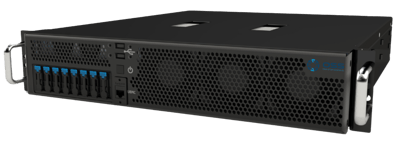
The Torrey 2U OCP/VPX Hybrid Server combines datacenter-class OCP computing with SOSA-aligned VPX interfaces to support demanding AI, sensor fusion, and data-processing workloads. With NVIDIA GPU support, up to 400GbE, PCIe Gen 5 RDMA, and rugged MIL-STD-810H certification, this hybrid Torrey delivers the performance and flexibility needed for mission-critical edge applications.
At AFA’s Air, Space & Cyber 2026 Conference, see how the Torrey 2U OCP/VPX Hybrid Server' open, scalable architecture can help advance next-generation capabilities across air, space, and cyber missions.
Check out the Solution Brief below or click here to learn more.
Holoscan Demonstration
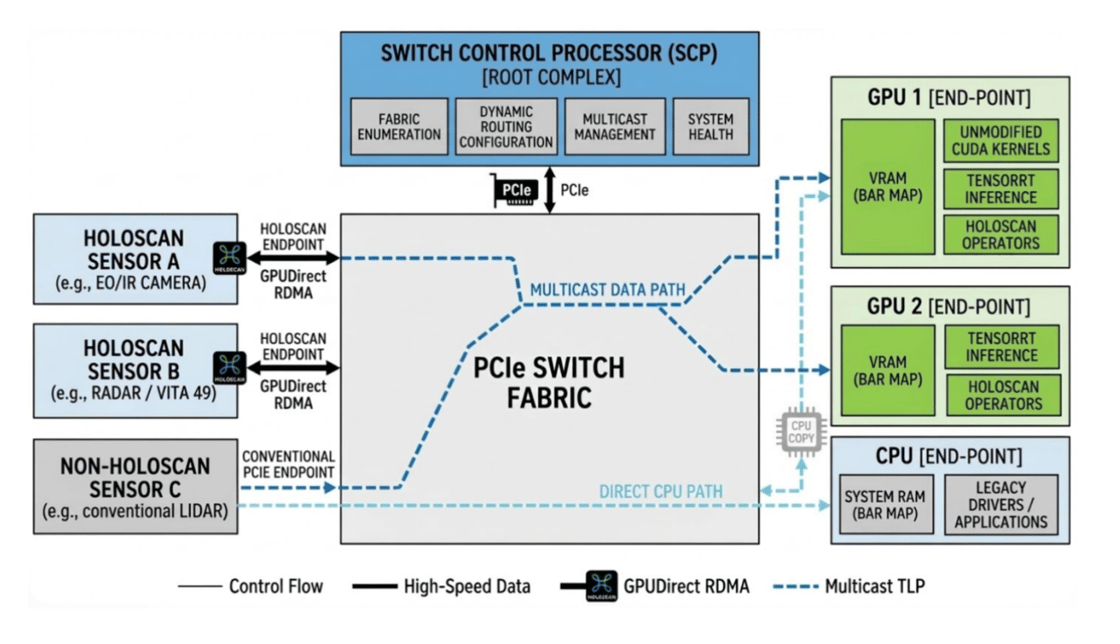
Our Holoscan Demo showcases a new approach to multi-modal sensor processing that combines NVIDIA Holoscan with PCIe switched fabrics to move sensor data directly to GPUs with ultra-low latency. By enabling direct sensor-to-GPU data paths, hardware-level multicast, and real-time AI processing, the architecture supports faster sensor fusion and decision-making for demanding EW and C-UAS missions.
See it in action at AFA’s Air, Space & Cyber 2026 Conference and explore how we enable deterministic, scalable computing at the tactical edge.
We received a $1.3 million award from the U.S. Navy upon delivering our 3U SDS Gen5 server to act as a data recorder. The award re-establishes our relationship with the Naval Surface Warfare Center Dahlgren Division Dam Neck Activity (NSWCDD DNA), which is home to the Navy’s cutting-edge fleet training systems development and resident experts in cyber and intelligence engineering, fleet readiness and fleet support operations across surface Navy programs.
“This award establishes an important new relationship for OSS within the U.S. Navy and we believe further strengthens our position with Department of Defense research and development organizations evaluating next-generation compute and storage architectures,” said Mike Knowles, President and CEO of OSS. “Capturing network traffic at these speeds without losing data is critical to how the Navy evaluates its systems and detects threats and is exactly what our platforms are purpose built to meet. We believe these early engagements are particularly valuable because they position OSS alongside customers as new platforms are developed, creating opportunities to support programs as they transition from initial deployment to broader production.”
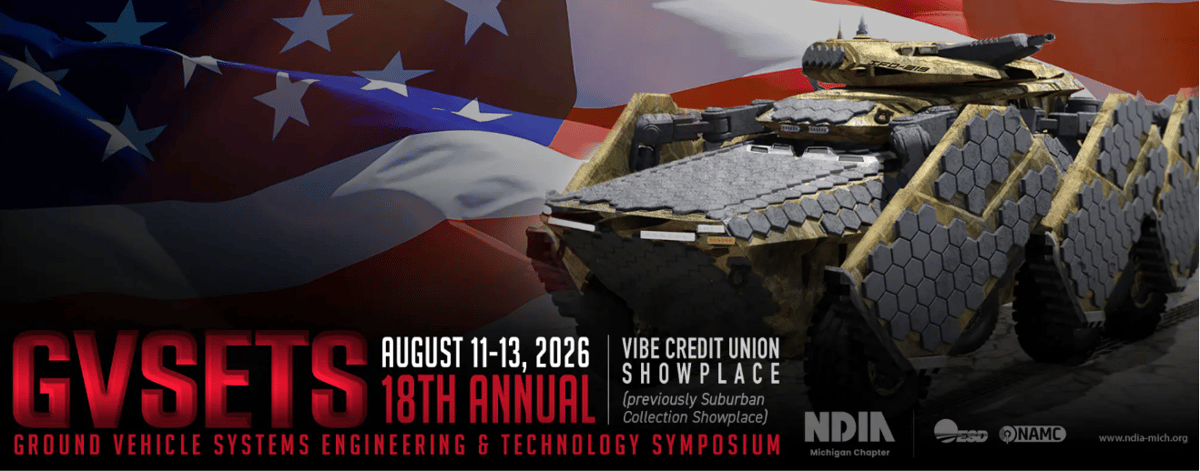
We kicked off the first trade show of the quarter at GVSETS 2026 in Novi, Michigan, connecting with industry leaders and exploring the latest advancements in ground vehicle systems. Discussions around C-UAS, sensor fusion, situational awareness, and MOSA highlighted the growing need for high-performance computing at the tactical edge. OSS showcased our Donati, Donati-SC, and Cernis embedded computing solutions built to support these evolving mission requirements.
Next week, we head to National Harbor, Maryland, for AFA’s Air, Space & Cyber 2026 Conference.
GVSETS 2026
GVSETS 2026 highlighted the growing need for Counter-UAS (C-UAS) capabilities that can detect, identify, and respond to emerging threats while integrating with existing tactical vehicle systems. OSS embedded solutions—including Donati, Donati-SC, and Cernis—are designed to provide the high-performance computing, sensor processing, and connectivity needed to support these missions at the tactical edge.
We’re looking forward to connecting with defense leaders and showcasing the rugged, high-performance computing and storage solutions that enable AI/ML, sensor processing, and sensor fusion at the edge.
Register for the show here and find us at Booth 253 in Prince George’s Hall.
The fourth quarter will take us around the country and across the defense and computing industries, with stops at three major events. See below for details!
Land Forces 2026
Hello, Australia! We are partnering with Eylex at Land Forces 2026. Stop by booth 1M15 during the 6th-8th of October in the Perth Convention & Exhibition Centre (Western Australia) to learn more about our solutions.
AUSA 2026
Join us October 12th-14th at the Walter E Washington Convention Center (Washington, DC) in Booth #7454!
Super Computing 2026
Join our exhibition from November 17th-19th at the McCormick Place Convention Center (Chicago, IL) in Booth #2824!
IAMD - Shattering the Sensor Silos: SOSA-Aligned 2U Hybrid Computing Node for Real-Time Multi-Domain Air Defense
Modern air defense depends on the ability to bring data from multiple sensors together and turn it into a unified, real-time picture. One of our latest Solution Briefs, “Shattering the Sensor Silos,” explores how an open, rugged computing architecture can help eliminate integration barriers while supporting real-time multi-domain air defense.
The brief highlights our Torrey 2U Hybrid Server, a MOSA- and SOSA-aligned platform that combines a high-performance computing core with up to three SOSA-aligned VPX I/O bays. This architecture creates a bridge between enterprise computing and tactical sensor systems, enabling AI and sensor-fusion workloads to operate within a single, software-defined platform.
Designed for deployment from system integration labs to forward operating environments, this hybrid Torrey provides a standardized architecture that can simplify technology refreshes, reduce lifecycle challenges, and support the evolving requirements of joint air defense.
“In airborne C5ISR (Command, Control, Computers, Communications, Cyber, Intelligence, Surveillance, and Reconnaissance) operations, performance is defined by how quickly a system can transform unstructured sensor streams into actionable intelligence. Platforms like high-altitude UAVs, maritime patrol aircraft, and airborne early warning platforms collect terabytes of data every minute from Synthetic Aperture Radar (SAR), Hyperspectral Imaging (HSI), Signals Intelligence (SIGINT), and Full-Motion Video (FMV).
To process this data on the edge, airborne computers face severe physical constraints—collectively known as SWaP-C (Size, Weight, Power, and Cost). Traditional server architectures struggle here because they hit the "memory wall": processing cores run much faster than the memory buses supplying them with data, leaving expensive processors idling. Compute Express Link (CXL), an open interconnect standard built on physical PCIe Gen 5 and Gen 6 layers, fundamentally alters this dynamic by enabling cache-coherent, low-latency resource sharing across CPUs, accelerators, and memory.”









.png?width=640&upscale=true&name=Untitled%20design%20(2).png)





Share:
2026 Q2 Newsletter